






Amber fragrances have their origins in an emblematic, rare and precious ingredient of perfumery: Ambergris, a natural substance secreted by sperm whales and washed back into the sea, which has a distinctive leathery, woody scent. The Amber accord is well known for its ability to add a sensual, seductive touch to a composition.
Today, the Amber note is mainly obtained through Ambrocenide, Ambrostar and Ambrox synthesis. Ambrocenide is a synthetic raw material used as an alternative to Ambergris, 3% renewable, 83% upcycled. Ambrostar is one of the most captive molecules to date, bringing the unforgettable Ambergris note to life. It is obtained by upcycling the Cedar tree side streams. Ambrox is a synthetic molecule, obtained from sclareol found in Sage essence, created in the 1950s as a substitute for natural Ambergris. It is fully renewable and biodegradable.


Warm, Powdery with Vanilla Accents


The Ambrette is a large annual or biennial herbaceous plant, native to India and the Asian rainforests. Its seeds are dried, crushed and then distilled to obtain a waxy solid, rich in fatty acids, called “Ambrette butter”, then treated and washed in an alkaline medium. The result is a pure essence called “Ambrette seeds absolute”. Ambrette is often used as an alternative to animal Musk, which is difficult to obtain.


Musky, Floral, Earthy, Nutty, Powdery
Ecuador, Peru
Steam Distillation and Solvent Treatment
Responsibly Sourced
Good Agricultural Practices Established


The Amyris, a tree typical of Haiti, is said to belong to the citrus botanical family. Its scent, however, is much closer to Sandalwood, hence the name Haitian Sandalwood, with the added advantage of being perhaps more refined, yet just as effective in its trail as its cousin. However, before becoming a raw material in perfumery, Amyris is best known to Haitians for its exceptional ability to be a natural Incense that ignites directly from a branch, earning it the nickname “candlewood”.
Sandalwood, Cedarwood, Nut, Balm
Haiti, Dominican Republic
Steam Distillation
A Programme that Guarantees a Strong and Positive Partnership with Local Producers.


Among the five different species of Angelica, a plant cultivated in France, the best known is archangelica, which means “angel weed”. Angelica offers green, herbaceous, woody, powdery notes similar to those of Musks.


Conifer, Earthy, Aniseed
France
Steam Distillation
A Programme that Guarantees a Strong and Positive Partnership with Local Producers.


Benzoin comes from the Styrax, a vigorous tree native to Southeast Asia, under 6 metres tall, with plum-coloured leaves. When the tree reaches 7 years of age, it is time to harvest its gum. The trunk of the tree is notched and, after a while, the liquid Benzoin collects under the bark and exudes from the incisions. When sufficiently hardened, the gum is collected. Each tree produces about 1.5 kg per year and the first three harvests give the finest Benzoin.
Sweet Vanilla, Woody, Powdery, Resinous
Indonesia
Incision and Solvent Extraction
Responsibly Sourced


Bergamot is a cross between the Lemon tree and the Bitter Orange tree, and has been cultivated in the province of Reggio di Calabria since the late 17th century. Initially obtained by steam distillation, cold pressing has been the preferred extraction method since the 19th century, preserving the zest’s fragrance.


Citrus, Tea, Floral, Lime
Italy, Calabria
Cold Pressing
The Bergamot Essence Cultivation and Production is Done in a Responsible Way by Supporting Local Farmers, Respecting Biodiversity and Using Efficient Production Technology to Reduce Energy and Water Use.
COSMOS Organic
Union for Ethical BioTrade Certified


Coffea arabica appears to be native to the Kaffa region of Abyssinia (present-day Ethiopia). It also grows wild in Arabia, in the Moka region. Wild Coffee trees were only discovered at the end of the 19th century in the plains of the lower inter-tropical regions of Africa and later proved to be of great economic interest. From the beans, a CO2 extraction is required to obtain the extract.

Sensual, Coffee, Warm
Central America, Africa, Middle East
CO2 Extraction


The Pepper plant is a liana native to India, Sri Lanka, Indonesia, Cambodia, Malaysia, Madagascar, Brazil and Cameroon, and Vietnam has since become one of the biggest producers. Here, cultivated in Madagascar, the young fresh Black Pepper berries are harvested still green, and crushed before distillation, which is done “on-site” to ensure freshness.
___
“A new spice with a typical smell. It is like a Black Pepper but deeper with a calamus
fond.”
Aliénor Massenet, Senior Perfumer

Herbaceous, Pine, Orange, Vegetal
Madagascar
Steam Distillation
COSMOS Organic
Union for Ethical BioTrade Certified
Ethically & Sustainably Sourced
Supporting a Local Essence-Producing Cooperative: Income Diversification & Women’s Empowerment.


Oxane is used to reproduce the Blackcurrant note and is present in certain fruits such as Passion Fruit, but it is synthetic oxane that is used in perfumery. It can also be used to reconstitute exotic fruity and green notes.


Caramel Accord can be reproduced by the use of Veltol. Invented in 1969, this powerful compound evokes the scent of ripe fruit or Caramel. Before the advent of gourmand perfumes, this molecule was only used in the food industry. Today, Veltol is used in almost all gourmand fragrance formulas.


Cardamom is a small perennial plant that grows wild in the tropical forests of Kerala. It began to be traded by the Swedish East India Company in the 18th century and was grown for harvesting in the 19th century. The plant needs shade: reforestation is done to maintain the shade the Cardamom needs.
Woody, Camphoraceous, Green, Anisic, Aldehydic
Guatemala
Steam Distillation
COSMOS Organic
The Cardamom Essence Cultivation and Production is Done in a Responsible Way by Supporting Local Farmers, Respecting Biodiversity and Using Efficient Production Technology to Reduce Energy and Water Use.


Iso E Super is used to reproduce Cedarwood notes and adds a light touch of Violet, hence its nickname Violet wood.


This reddish-brown conifer, native to North America, grows slowly but can reach 20 to 30 metres in height and live up to 300 years. It was introduced to Europe in the 17th century. Cedar essence is produced from wood shavings and sawdust recycled by carpenters, obtained by steam distillation of the bark.


Cinnamon is the inner bark of the Ceylon Cinnamon tree, and one of the oldest known spices. Cultivated in Madagascar, farmers grow the trees in the nutrient-rich red soils of the island and begin harvesting the pure bark by hand after the rainy season, when it is moist and rich in essence. It develops a woody, warm and suave scent.

Cinnamic, Balsamic, Warm, Ambery, Woody
Madagascar
Steam Distillation
COSMOS Organic
Union for Ethical BioTrade Certified
Part of a Wider Local Sustainable Sourcing Programme Enhancing Farmers’ Livelihoods & Respecting Biodiversity.
Women’s Empowerment: Creating New Value Chains in SAVA Region is Creating Additional Incomes for Women from Farm to Export.


Less known, milder and more delicate than Cinnamon bark, while retaining its intoxicating scent, the Cinnamon leaf brings original and delicate facets to woody, ferny or even aromatic fragrances.
Smoky, Clove, Cinnamic
Sri Lanka
A Programme that Guarantees a Strong and Positive Partnership with Local Producers.


Clary Sage is a semi-perennial and very resistant plant containing a high content of sclareol, a powerful molecule appreciated for its ability to transform into amber-scented derivatives. Named from the Latin “salvus”, meaning healthy, Clary Sage was believed to preserve health and prolong life.
Zesty, Bergamot, Tea, Lavender
France
Distillation
Responsibly & Ethically Sourced


The buds from the Clove tree are picked when ripe, just before the flower opens. Once dried, they take on this typical dark brown colour. They are composed of 85% eugenol, an aromatic compound known for its antiseptic and anti-inflammatory properties, that gives them this distinctive scent.
Floral, Carnation, Fruity
Indonesia, Madagascar
Steam Distillation
Organic Certified, Responsibly & Ethically Sourced
Work Directly with the Farmers to Train Them in Collection Methods and Safe Distillation Practices, to Optimise Harvest and Enabling a Regular & Additional Source of Income for This Community.


In perfumery, the Coconut note can be obtained by a synthetic molecule called Tonkalactone. This note combines well with floral notes.
___
“Dive into a coco lactone creaminess”
Balsamic, Fruity, Coconut, Tonka Creamy, Tuberose
High Impact Material
Readily Biodegradable
High Green Chemistry


Combava is a small green citrus fruit with a bumpy skin, which is widely used in Asian and Reunionese cuisine. The fruit and the leaf are rich in a strongly perfumed essence, with a scent reminiscent of Lemongrass. The globular fruit of this wild plant is warty and has a somewhat Lemon balm-like smell.


The seeds of this small aromatic herbaceous plant, much appreciated by Roman and Greek civilisations for its medicinal, gustatory and fragrant virtues, are hand-picked during the harvest period, when they are deemed ripe, that is when they become yellow, before getting dried and distilled.
Freesia, Pepper, Bergamot, Lavender
Moldova, Russia
Steam Distillation
COSMOS Organic
Ethically Sourced
Energy and Water Efficient Production Technology


This herbaceous plant is very similar to Papyrus and both belong to the genus Cyperus. Cypriol has erect, angular stems with short, thin, glossy green leaves. Its aromatic rhizomes are spread by an extensive root system. Cypriol is also an important remedy in traditional Chinese medicine.
Earthy, Terpenic, Patchouli
India
Responsibly Sourced


Davana is an aromatic herb that grows mainly in Southern India, where it was garlanded and offered to the god Shiva. Also known as “Marathi”, Davana usually grows very close to Sandalwood. The plant is very fragile and has a silvery-grey appearance. In summer, it produces pretty, fragrant yellow flowers. The Davana essence is obtained by steam distillation of the flowering tops of the plant.


Elemi is a 30-metre-high tree belonging to the Burseraceae family, like Incense or Myrrh. The resin is obtained using the “tapping” technique by making an incision through the tree’s bark. This incision, which is generally made once a day during the week of the harvest, causes the exudation of a white resin and its collection, when responsibly done, has no impact on the tree.
Pepper, Conifer, Olibanum, Lime
Philippines
Incision and Steam Distillation
COSMOS Organic
Ethically Sourced


It is a small plant with rounded tufts and bluish highlights. The flowers are a hypnotic yellow in summer and give off a powerful curry-like scent. Everlasting grows wild in the south of France, particularly in Corsica, and the absolute is obtained by extraction with volatile solvents. Helichrysum essence, obtained by steam distillation of the dried flowers of several species, is also used.
Amber, Cistus, Balsamic, Unique for its Inflections of Celery and Honey
Bosnia and Herzegovina, Macedonia
Extraction
Responsibly Sourced


Stemone, an aroma molecule, is often used to create Fig leaf, tomato leaf and Blackcurrant notes. It strengthens and modernises green notes.


Galbanum is a perennial herb that forms a kind of bush, growing particularly in desert and mountainous countries, like Afghanistan and Iran, where it is highly prized. Its yellow flowers with their quite disconcerting natural odour are not used, unlike its roots and its leaves, to give a green facet to a composition.
Terpenic, Mushroom, Peas, Grass
Iran
Steam Distillation


Its botanical name is derived from the Greek geranos, or crane, as the plant’s fruit resembles the bird’s bill. The variety of Geranium found on the shores of the Indian Ocean, in Madagascar, Comoros and Reunion Island, is called Bourbon. Cultivated on volcanic soil, the essence is extracted from its leaves.
Geranium, Palmarosa, Rose, Ginger, Citronella, Lychee
Madagascar
Steam Distillation
100% Renewable
Readily and Inherently Biodegradable
COSMOS Organic
Union for Ethical BioTrade Certified
Responsibly & Ethically Sourced


Known for ages for its therapeutic and culinary virtues, Ginger is a plant that originated in China and was introduced into ancient Egypt. Its underground stems are processed, once dried, and to obtain the true essence of this root, CO2 extraction is required.
Sparkling, Lemony, Rooty
Madagascar, Sava Region
CO2 Extraction: The Process Preserves the Natural Profile Identity of Raw Materials, Ensuring a High Purity Extract.
COSMOS Organic
Ethically Sourced
Energy and Water Efficient Production Technology


Damascone Alpha, a molecule that helps to reproduce the scent of Green Apple, does not exist in its natural state. It can only be obtained by synthesis and is used to create rosy, fruity floral notes.


Teas can be black, green, yellow, white, oolong or post-fermented, but they all come from the same plant, and their colours are obtained by processing the harvested leaves differently. The main steps in Tea making are plucking, withering, drying (only for white, green, yellow or oolong Tea), oxidising (for black, oolong or yellow teas), rolling, drying, sorting, final firing or roasting (for black or oolong teas).
Green, Fresh, Woody, Smoky
Asia
CO2 Extraction: The Process Preserves the Natural Profile Identity of Raw Materials, Ensuring a High Purity Extract.


Heliotrope occurs naturally in trace amounts in Vanilla, from which it can be extracted. This synthetic molecule also occurs naturally in small quantities in Violet leaves; its scent is quite similar to that of Coumarin, but more floral.


This very resistant plant, introduced to the French court from Italy by Queen Catherine de Médicis herself in the 16th century, has been used in perfumery and cosmetics since the Renaissance. Its rhizomes first need 3 years in the ground to mature from planting to harvesting, then another 3 years for the precursors (iridals) to slowly turn into irones. The rhizomes are then powdered and processed by hydrodistillation. The quantity of irones determines the value of the extract.
Powdery, Buttery, Violet, Woody
France, Italy, Morocco, China
Steam Distillation
Responsibly & Ethically Sourced


Jasmine’s delicate, heavenly scent is even reflected in its name, meaning “gift of god” in Persian. Grown in India and the Far East, Jasmine flowers are gathered at night when their scent is at its best. They are delicately laid out on cotton cloths coated with a fatty base for several days and then extracted, leaving the true Jasmine essence. More than five million flowers must be gathered to produce one kilo of what is known as “pure Jasmine absolute.”
White Flowers, Green, Intense
France (Grasse), Egypt, India, China
Extraction with Volatile Solvents


Jasmine Accord is obtained by the association of several perfumed ingredients. Benzyl acetate is one of the main synthetics used to reproduce the Jasmine scent.
Benzyl acetate is used in floral reconstitutions, notably Jasmine, Monoi and Ylang-ylang notes. Jasmine contains 20-35% of this molecule, and it was in 1920 that researchers succeeded in isolating it from Jasmine absolute.


The Cistus Labdanum is a very resistant shrub that grows wild in a large area of the Mediterranean basin. It is remarkable for the gum it secretes in summer to protect itself from the intense heat. Blossoming in April, its branches become red and seep. Nowadays, the Cistus is mainly harvested in the south of Spain. The leaves and twigs are either distilled or extracted to produce Cistus extracts.
Cinnamon, Animalic, Spicy, Ambery
Spain
Responsibly Sourced


Cuir Velours, an iconic base from the beginning of the 20th century, created to help perfumers at that time who used only natural products, mainly essences, to rely on synthetic compounds and become aware of their contribution. At the origins of today’s perfumery, this innovative blend is now modernised to continue creating the future of scents, with a leathery twist.
___
“An ultra-contemporary leather, luxurious and linear.”


This new fragrance molecule, derived from green, biodegradable and renewable chemistry using Orange peel, has fresh, transparent notes that make it very similar to Lily of the Valley flowers, whose scent is also very difficult to capture correctly. It boosts the freshness of the top notes and is ultra long-lasting.
___
“Lilybelle, a dual molecule: the freshness and delicacy of a floral Cyclamen lily-of-the-valley note, combined with a unique power and a very long-lasting effect.”


The name of this 10 to 15-metre-high tree, with its thick-petalled flowers, pays tribute to the renowned botanist of the late 17th century: Pierre Magnol. Native to China, where it is cultivated, its leaves have become a valuable source of inspiration and ingredients for the fragrance industry. Their use dates back centuries: they were traditionally employed in Asian perfumes for their aromatic properties.


Originally gifted to Chinese bureaucrat scholars (Mandarins), the Orange fruit quickly spread throughout Asia in the 10th century, reaching Europe in the early 19th century and becoming available in the United States in 1882, when six fruits of the ‘King’ Mandarin were sent from Saigon to California. Today the Madagascar-grown citrus is pressed by hand using an artisanal technique, reviving a tradition that originated in Calabria, Italy, to stay true to the fruit and preserve its full aroma.
Fresh, Sweet, Green, Bitter, Sour, Sparkling, Zesty, Aldehydic, Metallic
Madagascar
Cold Expression


Mate is a popular South American beverage made from the dried, roasted leaves of a small native tree called “yerba Mate”. Hot or cold, this herbal Tea is known to improve concentration and for its health benefits. Here, the unique absolute comes from Mate leaves of Brazilian origin.


Musks were originally derived from the secretion of the Musk deer found in Asia, Siberia and the Himalayas. Among the most widely used synthetic Musks are galaxolide and exaltolide.
Musky, Woody, Milky, Powdery, Warm


Myrrh is an ancient resin derived from a gnarled shrub originally grown in Somalia, Ethiopia and South Africa, and was already used by the Egyptians for embalming. The gum is obtained by exudation (natural or after tapping) which becomes red when drying.


The essence of Neroli comes from the white flower of the Bigaradier cultivated in Tunisia. At the origin of the name was Anne-Marie Orsini, princess of Nerola, Italy. She loved these small pretty flowers so much that she put them everywhere, in her bath, her clothes, her palace... Its liquid looks like yellow gold.


Fruit of the Nutmeg tree, grown in Indonesia, it is harvested year-round at maturity using a fruit picker. The first harvest should take place seven years after the tree is planted, as the fruit ripens slowly. The older the tree, the better its productivity and the quality of its essence, obtained by steam distillation.
Woody, Earthy, Pepper
Indonesia
Steam Distillation
COSMOS Organic
Responsibly Sourced


Also known as “Sweet Myrrh”, this aromatic resin comes from the Opoponax shrub, a plant native to East Africa and the Middle East. The resin is extracted from the bark of the tree.
Resinous, Fruity, Davana, Herbal
Ethiopia, Somalia
Responsibly Sourced


Oud is formed when the Aquilaria tree, found in the tropical forests of Southeast Asia, becomes infected with a fungus. This infection triggers a defence response in the tree, resulting in the production of a dark, aromatic resin. Used for centuries in the Orient, its powerful, mysterious scent, close to that of Sandalwood, is increasingly appreciated for composing and faceting fragrances and this high quality of Oud is cultivated in Vietnam.
___
“Oud wood is a magical ingredient, I love its ability to make a fragrance vibrate. It acts as a counterpoint, stretching the notes from the highest to the lowest notes, to give them depth. The material becomes like music, acting on the body, amplifying the gesture, with intensity, languor and sensuality.”
Clara Molloy, Co-Founder & Artistic Director

Animal, Leathery, Ambery, Spicy
Vietnam
Ethically Sourced


Patchouli is a perennial aromatic plant that thrives in warm, tropical climates, mainly cultivated in Indonesia. One of the most used ingredients in perfumery to give a woody, earthy, humid facet, this quality of Patchouli is iron-free.
Earthy, Orris, Mossy
Indonesia, Sulawesi
Steam Distillation
COSMOS Organic
Responsibly & Ethically Sourced
Supporting Farmers with Good Agricultural Practices Training: Crop Rotation and Soil Health Improvement, Using Compost as an Organic Fertiliser, Local Production of Organic Pesticide and Soil Erosion Prevention


Pearadise, a new 100% biosourced, renewable and biodegradable molecule, used to recreate a sweet, fruity Pear fragrance that cannot be extracted naturally.
___
“A perfect Pear scent upcycled from sugar cane. Succulent & Sustainable”


The resin is extracted by cutting the Peruvian Balsam tree, which can reach 25 to 30 metres in height, and its exploitation begins when the tree reaches 20 to 30 years old. The tree uses this resin to heal its bark.
Ambery, Vanillic, Warm, Animalic
El Salvador
Responsibly Sourced


The Lemon tree is a thorny shrub that can grow 3 to 8 metres tall, with evergreen leaves and white flowers. Like the Petitgrain bigarade, the tree’s leaves concentrate a fragrant principle that can be extracted with steam.
Hesperidic, Lemony, Green
Italy
Steam Distillation
Responsibly Sourced


Mainly produced in Florida, the Grapefruit is a hybrid between the Pomelo and the Sweet Orange. It would have been crossed for the first time in 1750 in Barbados, hence its original name “Barbados Grapefruit”.
Citrus, Fresh, Bitter
USA, Brazil, China, South Africa
Cold Expression


Pink Pepper comes from a tree that can reach 15 metres in height, with fragrant evergreen foliage; unlike other peppers, which come from a climbing plant, it only resembles them through its fresh and spicy notes. The fruit is dried when ripe to obtain its essence. Thanks to a pioneering process, it is now possible to extract the essence from the Pink Pepper tree’s leaves rather than its berries. Hand-picked, the leaves offer a new ingredient to the perfumer’s palette.
Carrot, Elemi, Clove, Angelica
Madagascar, Sava Region
Steam Distillation
100% Renewable
COSMOS Organic
Responsibly, Ethically & Sustainably Sourced
Supporting a Local Essence-Producing Cooperative with Agronomy Training, Income Diversification and Women’s Empowerment


The smell of this plant, with large green leaves and pink stems, rich in vitamin C and very invigorating, cannot be extracted directly. Thus, it is reconstituted from other essences.


Rose has been known for over 3,000 years and Rose water and essence were already distilled as early as the first century BC in North Africa. Muse of perfumers, the Damascena Rose, an iconic variety, is here harvested by hand for its olfactory qualities and finesse of expression. Absolute is obtained by extraction using volatile solvents, offering a warmer, honeyed variation.
Rosy, Palmarosa, Spicy, Honey
Bulgaria, Turkey & Morocco
Responsibly & Ethically Sourced
From Controlled and Responsible Cultivation (Good Agricultural Practices)


Intense, fresh and sparkling, the Rose essence comes from steam-water distillation. The quality of the Rose essence is adjusted at a later stage, when the batches of Rose essence produced during the growing season are mixed into lots.
Rosy, Petally, Green, Spicy, Honey
Bulgaria, Kazanlak Region
Steam Distillation
100% Renewable
COSMOS Organic
Responsibly & Ethically Sourced


Sandranol is mostly used to recreate a warm Sandalwood note. This perfumery component does not occur naturally.


Originating in Asia, particularly India and Indonesia, Sandalwood has been widely used since the 15th century and is endangered due to overharvesting. Australia is now growing this precious tree to prevent its extinction. The natural Sandalwood essence, derived from the rich heartwood and roots of the trees, which are parts of the trunk that contain most of the precious essence, is obtained by low pressure steam distillation then refined and blended.
Woody, Creamy, Milky
Australia
Steam Distillation
100% Renewable
Responsibly & Ethically Sourced
Energy and Water Efficient
Supporting Indigenous Communities (Partnership with Native Australians)


The Suede note, created synthetically, evokes the soft, suave scent of genuine Suede and adds a modern touch to leather notes in perfumery.


Tonka Bean Accord is obtained by the association of several perfumed ingredients. The natural raw material is composed of between 50 and 70% Coumarin, a synthetic molecule with powdery, Almond facets. This is why we use it to recreate the Tonka Bean scent.
Coumarin is an aromatic natural organic substance present in many plants, including Tonka Beans - its name actually comes from the coumarou, a tropical tree on which the Tonka Beans grow -, but also Cinnamon or Clary Sage, and can be extracted naturally. At the end of the 19th century, it was one of the first compounds to be synthesised for use in perfumery.


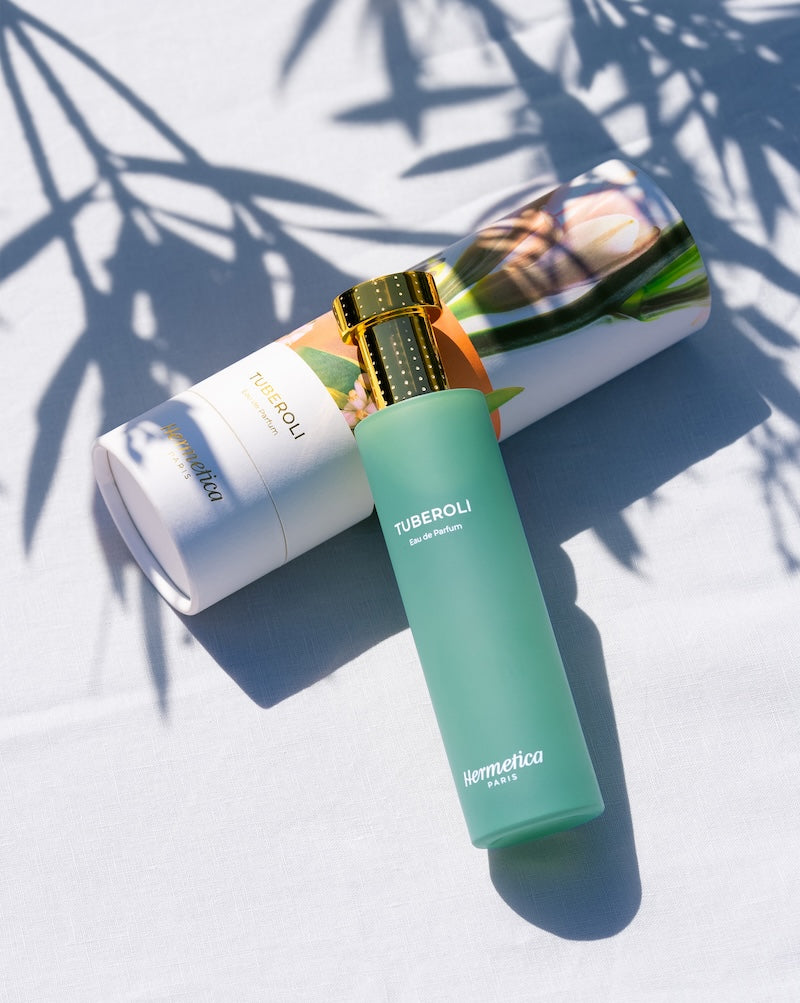
Tuberose is a herbaceous plant with a brown root from which young bulbs grow. The stem measures up to 1.20 metres, and the white flowers are grouped in spikes. Because of its size, plots have to be weeded by hand, and the flowers are harvested only at night.


Vanilla was discovered in 1520, when the Aztec Emperor welcomed the Spanish conquistadors with a drink called Xocolatl, concocted from powdered Cocoa and flavoured with Vanilla beans. Vanilla was later introduced to Reunion Island and Indonesia and nowadays Madagascar is the world’s leading producer. Vanilla extraction is complex and delicate. It is the pollination of the flower, carried out by hand using ancestral know-how, that produces the pod.
___
“Vanilla is the quintessence of femininity. Warm, sexy, mesmerising...simply irresistible”
Vanilla, Spicy, Tobacco, Warm, Balsam, Powdery, Cocoa, Dry Fruits, Woody
Madagascar
Solvent Extraction
Part of a Wider Local Sustainable Sourcing Programme Ensuring Long-Term Supply Chain Security and Respecting Biodiversity.
Part of a Wider Local Sustainable Sourcing Programme Enhancing Farmers’ Livelihoods.
Creating New Value Chains in SAVA Region
Supporting Local Communities


Vetiver is a one to two metre high herbaceous plant native to India, introduced to many tropical countries, and has been used for its medicinal qualities since antiquity. It comes in the form of large green clumps whose roots grow vertically to fairly great depths. Only the root, which is then dried, is used. It was not until the 20th century that it was distilled on a grand scale for the perfume industry. Vetiver is a key resource for Haiti, and Vetiver essence is obtained by the distillation of the plant’s roots.


It is a new profile of Vetiver created thanks to the expertise of terroir selection and method of extraction in Madagascar, with just the right leathery balance. Roots grow in 2 distinct soils: red earth inland and white earth, closer to the coasts with root humidity closely monitored. A special distillation is done under high pressure.
___
“Our Vetiver is the right leathery balance between a Vetiver Haïti and a Vetiver Java. It smells like horse fur, very soft, right next to the nostrils.”
Leathery, Smoky, Coffee, Citrusy
Madagascar, Sava Region
High-Pressure Distillation
COSMOS Organic
UEBT Certified, Part of a Wider Local Sustainable Sourcing Programme Ensuring Long-Term Supply Chain Security, Respecting Biodiversity and Enhancing Farmers’ Livelihoods, Energy Efficient Production Process, Supporting a Local Essence-Producing Cooperative with Training, Income Diversification & Women’s Empowerment.


The Violet flower is a “mute flower”, which makes it impossible to extract its smell. The perfumer must reproduce its scent from other raw materials, such as Beta Ionone and Methyl Ionone.
Beta Ionone can be used to reproduce not only the Violet scent but fruity notes of blackberry, Blackcurrant and Tea as well.
Methyl ionone is the most powdery of the ionones, a synthetic body with Violet odour, used in perfumery. It is used to reconstitute Tea, Violet and Carnation notes.


A perennial flower, Violet grows naturally throughout temperate zones. While the flower can be recognised by its colour and sweet, penetrating scent, it is the leaves that are used for absolute after solvent extraction. Violets are here cultivated ethically and responsibly in Egypt, like a reminiscence of its legend... Indeed, this flower was once named Ion, after Io who was Zeus’ lover, and escaped his wife’s wrath by fleeing to Egypt. And ionone remains the main odorant molecule that gives Violet its fragrance.

Violet, Green, Cucumber, Watery
Egypt
Solvent Extraction
UEBT Certified, Responsibly & Ethically Sourced
Ethically Minded Supplier that Works on New Agricultural Methods to Create Different Olfactive Qualities and Supports Local Initiatives in Egypt Including Education and Creative Development of Future Generations with Activities & Idea Exchange. Created a Foundation Focused on Financing Healthcare and Education Support in the Local Communities.


Made from Lavender grown in the South of France, a species unique in the world, the White Lavender accord is inspired by nature, thanks to a unique technology that faithfully reproduces the plant’s natural scent with a cocktail of molecules.
Herbal, Rosemary, Hay, Clary Sage
France (Provence)
Headspace
Inspired by Nature: Vitessence Technology Captures the Natural Smell of a Plant or a Flower and Reproduces It Faithfully with a Cocktail of Molecules Composed by the Perfumer.


Native to Southeast Asia, named after the Indonesian and Javanese name of the tree, kenanga, it can reach 20 to 30 metres in height. It is cultivated for its flowers, from which an essence is distilled and widely used in perfumery. To make it easier to harvest the flowers by hand, the trees are pruned. Ylang-Ylang flowers are grown all year round, and at maturity the flowers turn red.
Exotic, Deep and Floral, a Fruity Facet Reminiscent of Banana
Comoros, Madagascar, Philippines
Steam Distillation

